Buy visionblog.eu ?
We are moving the project
visionblog.eu .
Are you interested in purchasing the domain
visionblog.eu ?
domain@kv-gmbh.de · 0541-91531010
Buy visionblog.eu ?
How can one convert acceleration to Earth's acceleration?
To convert acceleration to Earth's acceleration, one can simply divide the given acceleration by the acceleration due to gravity on Earth, which is approximately 9.81 m/s^2. This will give the acceleration in terms of how many times Earth's gravity it is. For example, if a car is accelerating at 5 m/s^2, dividing this by 9.81 m/s^2 will give approximately 0.51 g, where g represents Earth's acceleration due to gravity. **
How can one convert acceleration to Earth acceleration?
To convert acceleration to Earth acceleration, one can use the formula: Earth acceleration = acceleration / 9.81 m/s^2. This formula is derived from the fact that Earth's gravitational acceleration is approximately 9.81 m/s^2. By dividing the given acceleration value by 9.81 m/s^2, one can determine how many times greater or smaller the acceleration is compared to Earth's gravitational acceleration. This conversion is useful for comparing accelerations in different contexts to the standard acceleration due to gravity on Earth. **


Similar search terms for Acceleration
Top-Angebote
Products related to Acceleration:
-
FOREO Imagination 100mlFOREO Imagination unique formula acts as the perfect base to your homemade face mask - so now you can make the most out of the fresh, natural ingredients from your kitchen. Formulated with Triple Infusion Complex, active nutrients are absorbed deep into the skin, feeding it from within. This antioxidant rich innovative product is enriched with Squalane and Vitamin E to help replenish fatty acids, and protect the skin from UV damage and damage caused by free radicals, leaving your skin looking and feeling healthier than ever before. Ingredients Aqua/Water/Eau, Glycerin, Cetearyl Alcohol, Caprylic/Capric Triglyceride, Cetyl Ethylhexanoate, Glyceryl Stearate, PEG-100 Stearate, Glycereth-26, Magnesium Aluminometasilicate, Dicaprylyl Carbonate, Hydroxyethyl Acrylate/Sodium Acryloyldimethyl Taurate Copolymer, Squalane, Potassium Cetyl Phosphate, Polysorbate 60, Trehalose, Hydroxyacetophenone, Pentaerythrityl Distearate, 1,2-Hexanediol, Xanthan Gum, Phospholipids, Allantoin, Panthenol, Bis-Ethoxydiglycol Cyclohexane 1,4-Dicarboxylate, Tocopheryl Acetate, Citrus Aurantium Dulcis Oil, Glycine Soja Oil, Sodium PCA, Disodium EDTA, Glycolipids, Dipotassium Glycyrrhizate, Glycine Soja Sterols, Propylene Glycol, Sodium Hyaluronate, Linoleic Acid, Glyceryl Linolenate41,99 £*Shipping: 0,00 £Secure redirect to the provider
-
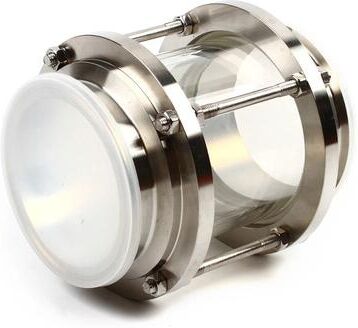
All Categories Goods Inline Sanitary Flow Sight Glass With Tri Clamp Sight Glass For Food & Beverage Inline Sanitary Flow Sight Glass With Tri Clamp Sight Glass For Food & BeverageImagine always knowing exactly whats flowing through your system at a glance no guesswork, no interruptions. This 4 approx inline sight glass gives brewers, food processors, and beverage makers a crystalclear view of liquids in motion, so you can...126,97 $*Shipping: 0,00 $Secure redirect to the provider
-
bareMinerals Mineralist Gloss-Balm-ImaginationDrench lips with sheer colour and glossy shine. Enriched with sustainably sourced fruit oils, this vegan lip gloss-balm delivers instant nourishment in a cushiony, non-sticky formula. Lips feel softer, smoother and more hydrated over time - even after you take it off. The cap and vial are made with post-consumer recycled plastic. Get the best of gloss and balm in one: sheer colour, high-shine and irresistibly soft lips. 90% said their lips felt instantly hydrated* Delivers up to 50% smoother lips in just 1 week* Based on a 1-week clinical study with 30 people. Results may vary. Dermatologist-tested. Shades: • Ambition • Clarity • Enlightenment • Heart • Imagination • Ingenuity • Love • Peace • Serenity • Sincerity • Trust • Vision • Wonder • Zen Ingredients Ambition, Clarity, Enlightenment, Heart, Imagination, Ingenuity, Love, Peace, Serenity, Sincerity, Trust, Vision, Wonder, Zen: Diisostearyl Malate, Phenyl Dimethicone, Triisostearyl Citrate, Glyceryl Behenate, Helianthus Annuus (Sunflower) Seed Wax, Simmondsia Chinensis (Jojoba) Seed Oil, Punica Granatum Flower Extract, Hippophae Rhamnoides Oil, Prunus Domestica Seed Oil, Ascorbyl Palmitate, Tocopherol, Silica Dimethyl Silylate, Calcium Stearate, Polyglyceryl-2 Triisostearate, Flavor (Aroma), Linalool. May Contain/Peut Contenir (+/-): Mica, Titanium Dioxide (Ci 77891), Iron Oxides (Ci 77491, Ci 77492, Ci 77499), Blue 1 Lake (Ci 42090), Red 7 Lake (Ci 15850), Red 28 Lake (Ci 45410), Yellow 5 Lake (Ci 19140).15,60 £*Shipping: 2,95 £Secure redirect to the provider



-
What is the difference between gravitational acceleration and Earth's acceleration?
Gravitational acceleration is the acceleration experienced by an object due to the force of gravity, which is approximately 9.81 m/s^2 on the surface of the Earth. Earth's acceleration, on the other hand, refers to the acceleration of the Earth itself as it orbits the Sun, which is approximately 9.81 m/s^2 towards the Sun. In essence, gravitational acceleration is the acceleration experienced by objects on Earth due to gravity, while Earth's acceleration is the acceleration of the Earth as it moves through space. **
-
What is the difference between tangential acceleration and rotational acceleration?
Tangential acceleration is the acceleration of an object moving in a circular path, and it is directed along the tangent to the path. It is caused by a change in the object's speed or direction. On the other hand, rotational acceleration is the rate of change of angular velocity of an object rotating around an axis. It is caused by a torque or force acting on the object, and it is directed perpendicular to the plane of rotation. In summary, tangential acceleration is related to linear motion in a circular path, while rotational acceleration is related to the change in the rate of rotation of an object. **
-
What is the formula for acceleration in uniform acceleration in physics?
The formula for acceleration in uniform acceleration in physics is given by a = (v - u) / t, where a is the acceleration, v is the final velocity, u is the initial velocity, and t is the time taken. This formula represents the change in velocity over time, and it is used to calculate the rate at which an object's velocity is changing. Acceleration is measured in meters per second squared (m/s^2). **
-
Is acceleration always constant?
No, acceleration is not always constant. Acceleration is the rate of change of velocity, so if an object's velocity is changing at a constant rate, then its acceleration is constant. However, if an object's velocity is changing at a non-constant rate, then its acceleration will also be non-constant. For example, when an object is thrown upwards, its acceleration due to gravity is constant, but when a car is speeding up or slowing down, its acceleration is not constant. **


What is negative acceleration?
Negative acceleration, also known as deceleration or retardation, occurs when an object's velocity decreases over time. This means that the object is slowing down. Negative acceleration can be caused by forces such as friction, air resistance, or opposing forces acting on the object. It is represented by a negative value in equations of motion and is the opposite of positive acceleration, which causes an object to speed up. **
Why is there acceleration?
Acceleration occurs when there is a change in an object's velocity, either in magnitude or direction. This change can be caused by a force acting on the object, such as gravity, friction, or a push or pull from another object. According to Newton's second law of motion, the acceleration of an object is directly proportional to the net force acting on it and inversely proportional to its mass. Therefore, if there is a net force acting on an object, it will experience acceleration in the direction of the force. **
Top-Angebote
Products related to Acceleration:
-
FOREO Imagination 100mlFOREO Imagination unique formula acts as the perfect base to your homemade face mask - so now you can make the most out of the fresh, natural ingredients from your kitchen. Formulated with Triple Infusion Complex, active nutrients are absorbed deep into the skin, feeding it from within. This antioxidant rich innovative product is enriched with Squalane and Vitamin E to help replenish fatty acids, and protect the skin from UV damage and damage caused by free radicals, leaving your skin looking and feeling healthier than ever before. Ingredients Aqua/Water/Eau, Glycerin, Cetearyl Alcohol, Caprylic/Capric Triglyceride, Cetyl Ethylhexanoate, Glyceryl Stearate, PEG-100 Stearate, Glycereth-26, Magnesium Aluminometasilicate, Dicaprylyl Carbonate, Hydroxyethyl Acrylate/Sodium Acryloyldimethyl Taurate Copolymer, Squalane, Potassium Cetyl Phosphate, Polysorbate 60, Trehalose, Hydroxyacetophenone, Pentaerythrityl Distearate, 1,2-Hexanediol, Xanthan Gum, Phospholipids, Allantoin, Panthenol, Bis-Ethoxydiglycol Cyclohexane 1,4-Dicarboxylate, Tocopheryl Acetate, Citrus Aurantium Dulcis Oil, Glycine Soja Oil, Sodium PCA, Disodium EDTA, Glycolipids, Dipotassium Glycyrrhizate, Glycine Soja Sterols, Propylene Glycol, Sodium Hyaluronate, Linoleic Acid, Glyceryl Linolenate41,99 £*Shipping: 0,00 £Secure redirect to the provider
-
All Categories Goods Inline Sanitary Flow Sight Glass With Tri Clamp Sight Glass For Food & Beverage Inline Sanitary Flow Sight Glass With Tri Clamp Sight Glass For Food & BeverageImagine always knowing exactly whats flowing through your system at a glance no guesswork, no interruptions. This 4 approx inline sight glass gives brewers, food processors, and beverage makers a crystalclear view of liquids in motion, so you can...126,97 $*Shipping: 0,00 $Secure redirect to the provider
-
How can one convert acceleration to Earth's acceleration?
To convert acceleration to Earth's acceleration, one can simply divide the given acceleration by the acceleration due to gravity on Earth, which is approximately 9.81 m/s^2. This will give the acceleration in terms of how many times Earth's gravity it is. For example, if a car is accelerating at 5 m/s^2, dividing this by 9.81 m/s^2 will give approximately 0.51 g, where g represents Earth's acceleration due to gravity. **
-
How can one convert acceleration to Earth acceleration?
To convert acceleration to Earth acceleration, one can use the formula: Earth acceleration = acceleration / 9.81 m/s^2. This formula is derived from the fact that Earth's gravitational acceleration is approximately 9.81 m/s^2. By dividing the given acceleration value by 9.81 m/s^2, one can determine how many times greater or smaller the acceleration is compared to Earth's gravitational acceleration. This conversion is useful for comparing accelerations in different contexts to the standard acceleration due to gravity on Earth. **
-
What is the difference between gravitational acceleration and Earth's acceleration?
Gravitational acceleration is the acceleration experienced by an object due to the force of gravity, which is approximately 9.81 m/s^2 on the surface of the Earth. Earth's acceleration, on the other hand, refers to the acceleration of the Earth itself as it orbits the Sun, which is approximately 9.81 m/s^2 towards the Sun. In essence, gravitational acceleration is the acceleration experienced by objects on Earth due to gravity, while Earth's acceleration is the acceleration of the Earth as it moves through space. **
-
What is the difference between tangential acceleration and rotational acceleration?
Tangential acceleration is the acceleration of an object moving in a circular path, and it is directed along the tangent to the path. It is caused by a change in the object's speed or direction. On the other hand, rotational acceleration is the rate of change of angular velocity of an object rotating around an axis. It is caused by a torque or force acting on the object, and it is directed perpendicular to the plane of rotation. In summary, tangential acceleration is related to linear motion in a circular path, while rotational acceleration is related to the change in the rate of rotation of an object. **
Similar search terms for Acceleration
-
bareMinerals Mineralist Gloss-Balm-ImaginationDrench lips with sheer colour and glossy shine. Enriched with sustainably sourced fruit oils, this vegan lip gloss-balm delivers instant nourishment in a cushiony, non-sticky formula. Lips feel softer, smoother and more hydrated over time - even after you take it off. The cap and vial are made with post-consumer recycled plastic. Get the best of gloss and balm in one: sheer colour, high-shine and irresistibly soft lips. 90% said their lips felt instantly hydrated* Delivers up to 50% smoother lips in just 1 week* Based on a 1-week clinical study with 30 people. Results may vary. Dermatologist-tested. Shades: • Ambition • Clarity • Enlightenment • Heart • Imagination • Ingenuity • Love • Peace • Serenity • Sincerity • Trust • Vision • Wonder • Zen Ingredients Ambition, Clarity, Enlightenment, Heart, Imagination, Ingenuity, Love, Peace, Serenity, Sincerity, Trust, Vision, Wonder, Zen: Diisostearyl Malate, Phenyl Dimethicone, Triisostearyl Citrate, Glyceryl Behenate, Helianthus Annuus (Sunflower) Seed Wax, Simmondsia Chinensis (Jojoba) Seed Oil, Punica Granatum Flower Extract, Hippophae Rhamnoides Oil, Prunus Domestica Seed Oil, Ascorbyl Palmitate, Tocopherol, Silica Dimethyl Silylate, Calcium Stearate, Polyglyceryl-2 Triisostearate, Flavor (Aroma), Linalool. May Contain/Peut Contenir (+/-): Mica, Titanium Dioxide (Ci 77891), Iron Oxides (Ci 77491, Ci 77492, Ci 77499), Blue 1 Lake (Ci 42090), Red 7 Lake (Ci 15850), Red 28 Lake (Ci 45410), Yellow 5 Lake (Ci 19140).15,60 £*Shipping: 2,95 £Secure redirect to the provider
-
BOB Books VersaTiles Kit: Sight WordsBob Books offers repetition and fun stories to introduce important sight words. Consistent short vowels and simple stories ensure that each book is a gentle step into early reading.Alongside these books students can practice the skills they are...39,99 $*Shipping: 0,00 $Secure redirect to the provider
-
Sesderma Reti Age 5 Liposomal Serum Anti-Aging Innovation 30mLA facial serum for wrinkles and signs of ageing. Reduces wrinkles and fine lines. Hydrates and strengthens barrier. Restores youthful radiance. 5-Retinoid System: smooths wrinkles, accelerates renewal, and boosts collagen. Biomimetic Peptides: fill expression lines by stimulating collagen synthesis.54,51 £*Shipping: 5,34 £Secure redirect to the provider
-
What is the formula for acceleration in uniform acceleration in physics?
The formula for acceleration in uniform acceleration in physics is given by a = (v - u) / t, where a is the acceleration, v is the final velocity, u is the initial velocity, and t is the time taken. This formula represents the change in velocity over time, and it is used to calculate the rate at which an object's velocity is changing. Acceleration is measured in meters per second squared (m/s^2). **
-
Is acceleration always constant?
No, acceleration is not always constant. Acceleration is the rate of change of velocity, so if an object's velocity is changing at a constant rate, then its acceleration is constant. However, if an object's velocity is changing at a non-constant rate, then its acceleration will also be non-constant. For example, when an object is thrown upwards, its acceleration due to gravity is constant, but when a car is speeding up or slowing down, its acceleration is not constant. **
-
What is negative acceleration?
Negative acceleration, also known as deceleration or retardation, occurs when an object's velocity decreases over time. This means that the object is slowing down. Negative acceleration can be caused by forces such as friction, air resistance, or opposing forces acting on the object. It is represented by a negative value in equations of motion and is the opposite of positive acceleration, which causes an object to speed up. **
-
Why is there acceleration?
Acceleration occurs when there is a change in an object's velocity, either in magnitude or direction. This change can be caused by a force acting on the object, such as gravity, friction, or a push or pull from another object. According to Newton's second law of motion, the acceleration of an object is directly proportional to the net force acting on it and inversely proportional to its mass. Therefore, if there is a net force acting on an object, it will experience acceleration in the direction of the force. **
* All prices are inclusive of VAT and, if applicable, plus shipping costs. The offer information is based on the details provided by the respective shop and is updated through automated processes. Real-time updates do not occur, so deviations can occur in individual cases. ** Note: Parts of this content were created by AI.