Buy visionblog.eu ?
We are moving the project
visionblog.eu .
Are you interested in purchasing the domain
visionblog.eu ?
domain@kv-gmbh.de · 0541-91531010
Buy visionblog.eu ?
Can you make a presentation about "Thinking, Fast and Slow" by Daniel Kahneman?
"Thinking, Fast and Slow" by Daniel Kahneman is a groundbreaking book that explores the two systems that drive the way we think: the fast, intuitive, and emotional system, and the slow, deliberate, and logical system. The book delves into the cognitive biases and errors that affect our decision-making processes, and offers insights into how we can make better choices by understanding these systems. It also discusses the impact of these systems on various aspects of our lives, such as economics, psychology, and behavioral economics. Overall, "Thinking, Fast and Slow" provides a fascinating and thought-provoking look into the complexities of human thought and decision-making. **
Is it difficult to read "Thinking, Fast and Slow" by Daniel Kahneman in English?
The difficulty of reading "Thinking, Fast and Slow" by Daniel Kahneman in English may vary depending on the reader's proficiency in the language. The book delves into complex psychological concepts and research findings, which may require a higher level of English comprehension. However, Kahneman's writing style is clear and accessible, making it easier for readers to grasp the concepts presented. Overall, while some readers may find certain sections challenging, others may find it relatively easy to follow. **
Similar search terms for Kahneman
Top-Angebote
Products related to Kahneman:
-
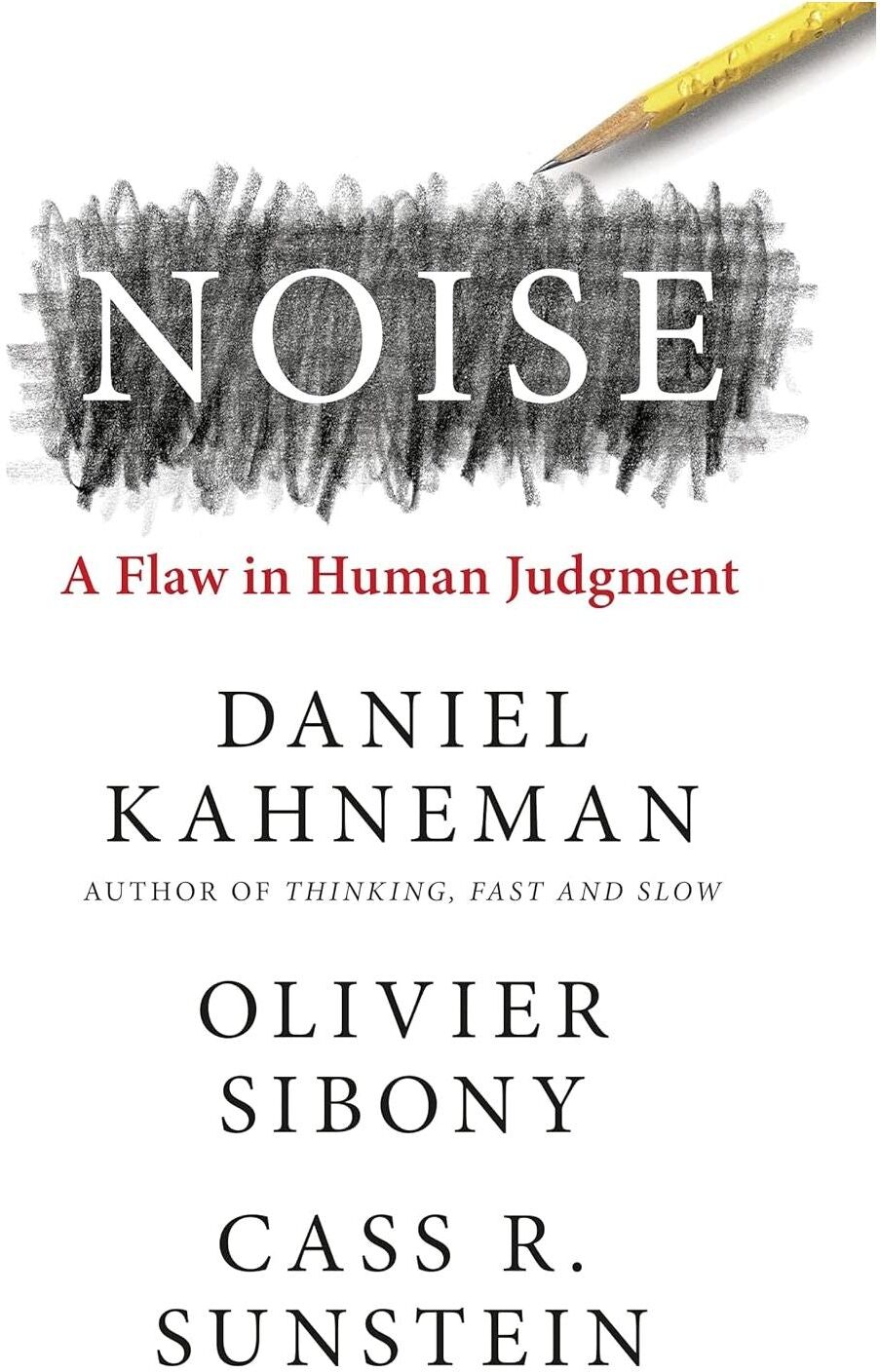
Penguin/HarperCollins Noise & Thinking Fast and Slow By Daniel Kahneman 2 Books Collection SetNoise & Thinking Fast and Slow By Daniel Kahneman 2 Books Collection Set: Noise: In Noise, Daniel Kahneman, Olivier Sibony and Cass R. Sunstein show how noise produces errors in many fields, including in medicine, law, public health, economic forecasting, forensic science, child protection, creative strategy, performance review and hiring. And although noise can be found wherever people are making judgements and decisions, individuals and organizations alike commonly ignore its impact, at great cost.Packed with new ideas, and drawing on the same kind of sharp analysis and breadth of case study that made Thinking, Fast and Slow and Nudge international bestsellers, Noise explains how and why humans are so susceptible to noise and bias in decision-making. Thinking Fast and Slow: Why is there more chance we'll believe something if it's in a bold type face? Why are judges more likely to deny parole before lunch? Why do we assume a good-looking person will be more competent? The answer lies in the two ways we make choices: fast, intuitive thinking, and slow, rational thinking. This book reveals how our minds are tripped up by error and prejudice (even when we think we are being logical), and gives you practical techniques for slower, smarter thinking. It will enable to you make better decisions at work, at home, and in everything you do.10,89 £*Shipping: 2,99 £Secure redirect to the provider
-
PENGUIN/RIVERHEAD BOOKS Messy (Hardback) By Tim Harford & Thinking Fast and Slow By Daniel Kahneman 2 Books Collection SetMessy (Hardback) By Tim Harford & Thinking Fast and Slow By Daniel Kahneman 2 Books Collection Set: Messy (Hardback) The urge to tidiness seems to be rooted deep in the human psyche. Many of us feel threatened by anything that is vague, unplanned, scattered around or hard to describe. We find comfort in having a script to rely on, a system to follow, in being able to categorise and file away.We all benefit from tidy organisation - up to a point. A large library needs a reference system. Global trade needs the shipping container. Scientific collaboration needs measurement units. But the forces of tidiness have marched too far. Thinking Fast and Slow Why is there more chance we'll believe something if it's in a bold type face? Why are judges more likely to deny parole before lunch? Why do we assume a good-looking person will be more competent? The answer lies in the two ways we make choices: fast, intuitive thinking, and slow, rational thinking. This book reveals how our minds are tripped up by error and prejudice (even when we think we are being logical), and gives you practical techniques for slower, smarter thinking. It will enable to you make better decisions at work, at home, and in everything you do.9,89 £*Shipping: 2,99 £Secure redirect to the provider
-
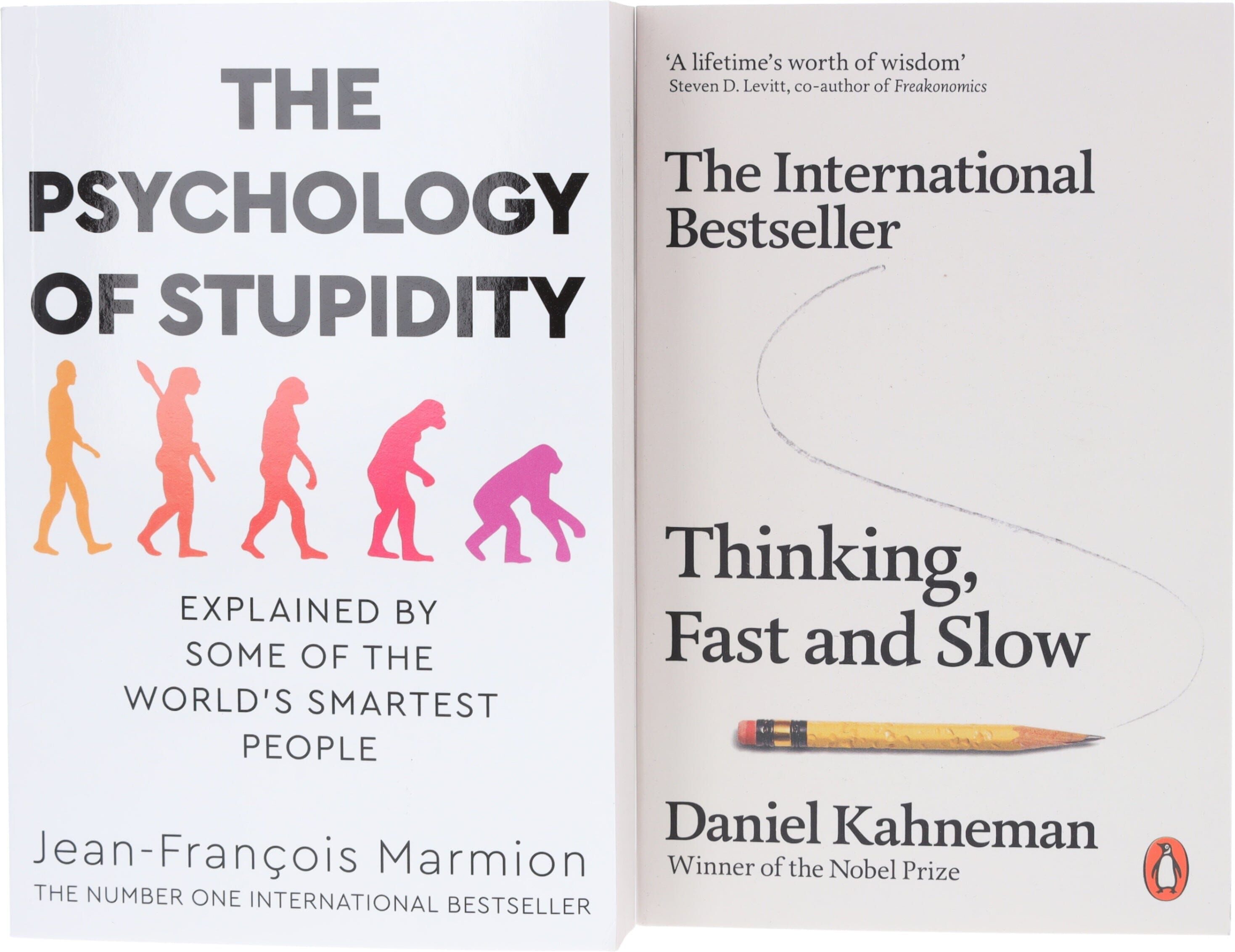
Thinking, Fast and Slow & The Psychology of Stupidity by Daniel Kahneman & Jean-Francois Marmion 2 Books Collection Set - Non Fiction - Paperback penguin/MacmillanTitles in this Set: 1. Thinking, Fast and Slow 2. The Psychology of Stupidity Description: Thinking, Fast and Slow Why is there more chance we'll believe something if it's in a bold type face? Why are judges more likely to deny parole before lunch? Why do we assume a good-looking person will be more competent? The answer lies in the two ways we make choices: fast, intuitive thinking, and slow, rational thinking. This book reveals how our minds are tripped up by error and prejudice (even when we think we are being logical), and gives you practical techniques for slower, smarter thinking, enabling you to make better decisions at work, at home, and in everything you do. The Psychology of Stupidity A comprehensive and witty exploration of human stupidity from some of the world’s smartest minds, including: Daniel Kahneman, Dan Ariely, Alison Gopnik, Howard Gardner, Antonio Damasio, Aaron James, Ryan Holiday and more, Stupidity is all around us, from the colleagues who won’t stop hitting ‘reply all’ to the former school friends posting conspiracy theories on Facebook. But in order to battle idiocy, we must first understand it. In The Psychology of Stupidity, some of the world’s leading psychologists and thinkers – including a Nobel Prize winner – will show you . . . · Why smart people sometimes believe in utter nonsense · How our lazy brains cause us to make the wrong decisions · Why trying to debate with fools is a trap · How media manipulation and Internet overstimulation makes us dumber · Why the stupidest people don’t think they’re stupid As long as there have been humans there has been human stupidity, but with wit and wisdom these great thinkers can help us understand this persistent human affliction.14,99 £*Shipping: 2,99 £Secure redirect to the provider
-
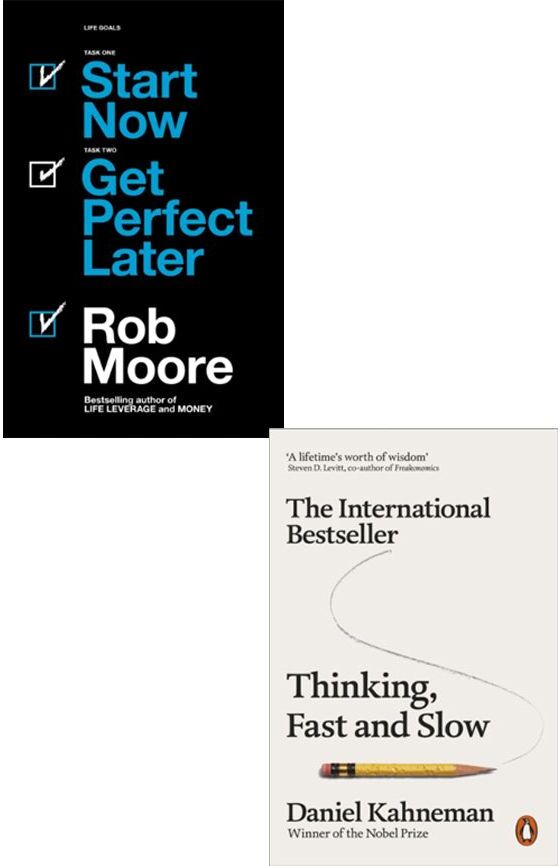
Penguin/John Murray Press Thinking, Fast and Slow By Daniel Kahneman & Start Now. Get Perfect Later by Rob Moore 2 Books Collection SetThinking, Fast and Slow By Daniel Kahneman & Start Now. Get Perfect Later by Rob Moore 2 Books Collection Set:Thinking Fast and Slow:Why is there more chance we'll believe something if it's in a bold type face? Why are judges more likely to deny parole before lunch? Why do we assume a good-looking person will be more competent? The answer lies in the two ways we make choices: fast, intuitive thinking, and slow, rational thinking. This book reveals how our minds are tripped up by error and prejudice (even when we think we are being logical), and gives you practical techniques for slower, smarter thinking. It will enable to you make better decisions at work, at home, and in everything you do.Start Now Get Perfect Later:Hardly anyone gets it right the first time, but many of us are crippled by indecision and fear of failure. The desire to get it right can inhibit us from getting started. In this book Rob Moore, the bestselling author of MONEY, shows that the quickest way to perfect is starting right now and improving as you go. This book will show you how to launch your business or idea, begin the next phase of your career, and overcome self-doubt - right away. Get perfect later, get started NOW.11,99 £*Shipping: 2,99 £Secure redirect to the provider

-
How good is your imagination? How well can you visualize images in your mind?
As an AI, I do not possess the ability to imagine or visualize images in the same way humans do. My responses are generated based on patterns and data, rather than creative imagination. **
-
Which study programs focus on analytical thinking and spatial-visual imagination?
Programs in fields such as mathematics, physics, engineering, computer science, architecture, and design often focus on analytical thinking and spatial-visual imagination. These programs require students to think critically, solve complex problems, and visualize spatial relationships. For example, mathematics and physics programs emphasize analytical thinking, while architecture and design programs focus on spatial-visual imagination. Engineering and computer science programs also require a combination of analytical thinking and spatial-visual skills to design and develop innovative solutions. **
-
From which perspective does one dream lucidly?
One can dream lucidly from the perspective of being aware and in control of their dream state. This means that the dreamer is conscious that they are dreaming and can actively participate in and manipulate the events of the dream. This perspective allows the dreamer to experience a heightened sense of awareness and control within their dreams, often leading to a more immersive and vivid dream experience. **
-
What are the concepts of sociological imagination, sociological thinking, and sociological perspective?
Sociological imagination is the ability to see the connections between personal experiences and larger social forces. It allows individuals to understand how their lives are shaped by historical, cultural, and structural factors. Sociological thinking involves critically analyzing social phenomena and understanding the underlying social patterns and structures that influence them. Sociological perspective refers to the lens through which sociologists view the world, emphasizing the importance of social context, power dynamics, and social inequalities in shaping individual and group behaviors. Together, these concepts help individuals understand the broader social forces at play in their lives and in society as a whole. **


Do you provide an insight or grant an insight?
I provide insights. As a language model AI, I can offer information, analysis, and perspectives on various topics based on the data and knowledge I have been trained on. I can help users gain a better understanding of a subject by providing valuable insights and suggestions. **
What exactly does innovation mean?
Innovation refers to the process of creating new ideas, products, or methods that bring about positive change or improvement. It involves thinking outside the box, taking risks, and challenging the status quo to develop something unique and valuable. Innovation can occur in various fields such as technology, business, science, and art, and is essential for driving progress and growth in society. **
Top-Angebote
Products related to Kahneman:
-
HARPERCOLLINS Noise by Daniel Kahneman (Paperback)From the world-leaders in strategic thinking and the multi-million copy bestselling authors of Thinking Fast and Slow and Nudge, the next big book to change the way you think. Imagine that two doctors in the same city give different diagnoses to identical patients – or that two judges in the same court give different sentences to people who have committed matching crimes. Now imagine that the same doctor and the same judge make different decisions depending on whether it is morning or afternoon, or Monday rather than Wednesday, or they haven’t yet had lunch. These are examples of noise: variability in judgements that should be identical. In Noise, Daniel Kahneman, Olivier Sibony and Cass R. Sunstein show how noise produces errors in many fields, including in medicine, law, public health, economic forecasting, forensic science, child protection, creative strategy, performance review and hiring. And although noise can be found wherever people are making judgements and decisions, individuals and organizations alike commonly ignore its impact, at great cost. Packed with new ideas, and drawing on the same kind of sharp analysis and breadth of case study that made Thinking, Fast and Slow and Nudge international bestsellers, Noise explains how and why humans are so susceptible to noise and bias in decision-making. We all make bad judgements more than we think. With a few simple remedies, this groundbreaking book explores what we can do to make better ones.7,99 £*Shipping: 2,99 £Secure redirect to the provider
-
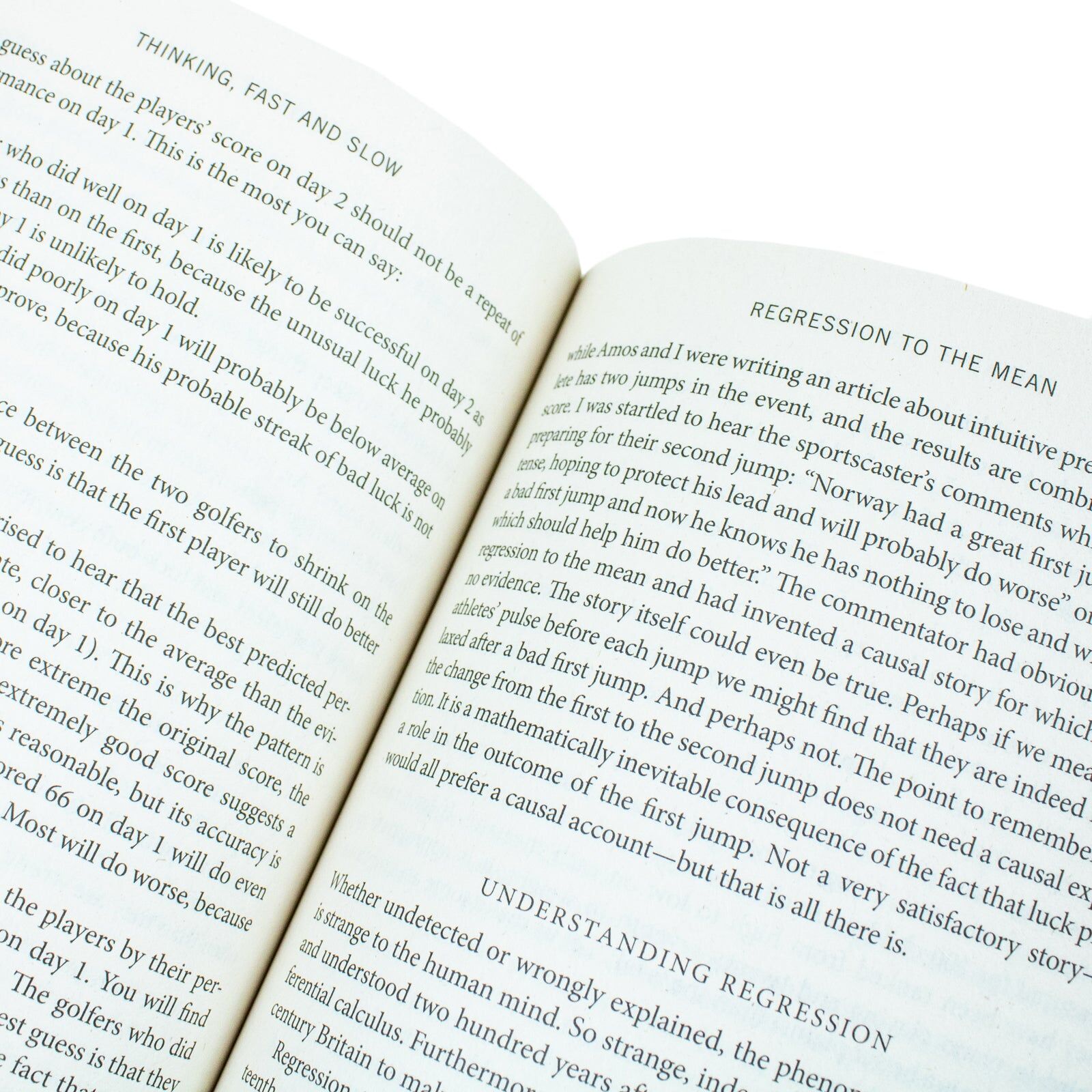
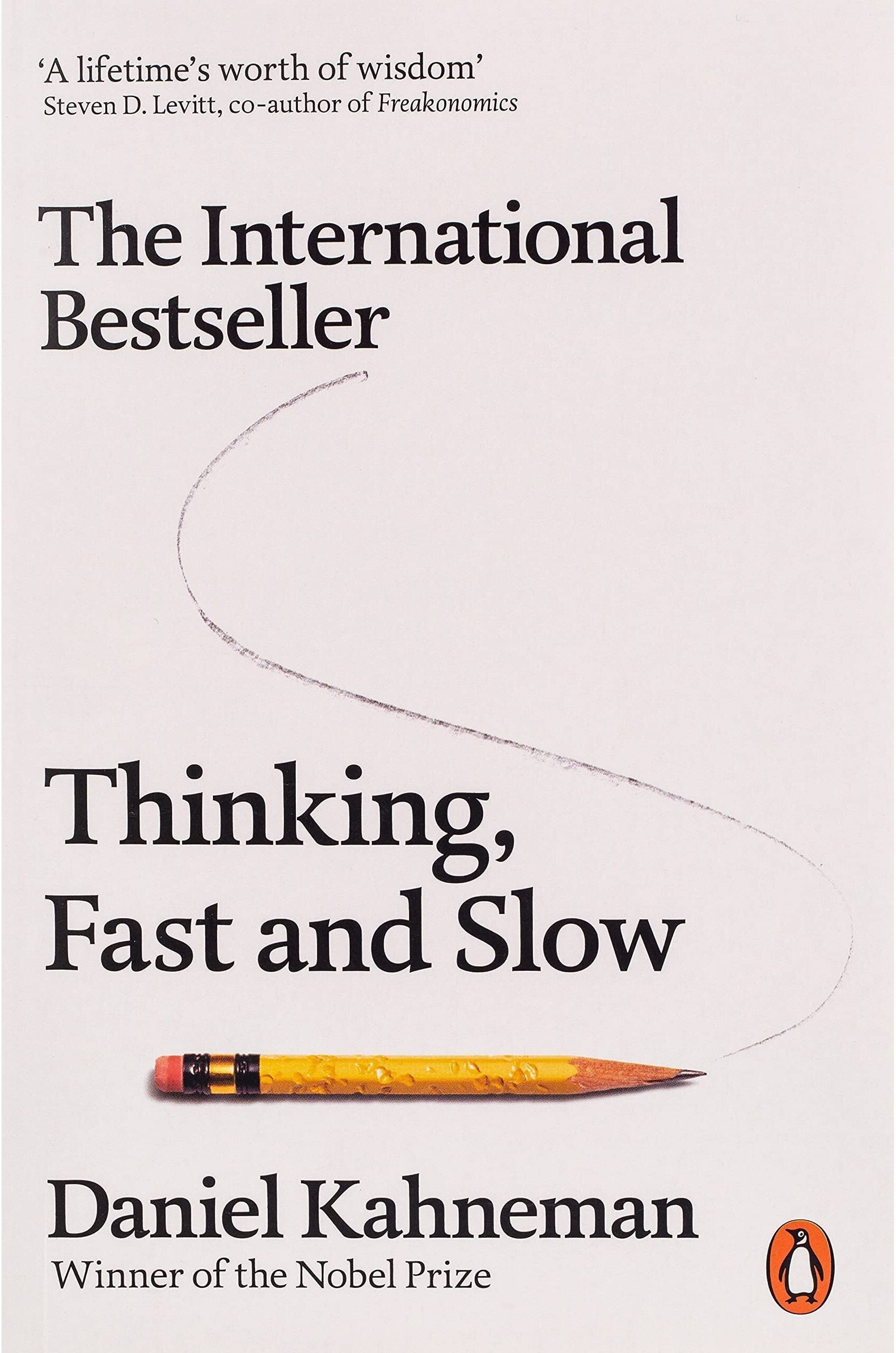
Penguin Thinking, Fast and Slow by Daniel KahnemanWhy is there more chance we'll believe something if it's in a bold type face? Why are judges more likely to deny parole before lunch? Why do we assume a good-looking person will be more competent? The answer lies in the two ways we make choices: fast, intuitive thinking, and slow, rational thinking. This book reveals how our minds are tripped up by error and prejudice (even when we think we are being logical), and gives you practical techniques for slower, smarter thinking. It will enable to you make better decisions at work, at home, and in everything you do.7,99 £*Shipping: 2,99 £Secure redirect to the provider
-
Penguin/HarperCollins Noise & Thinking Fast and Slow By Daniel Kahneman 2 Books Collection SetNoise & Thinking Fast and Slow By Daniel Kahneman 2 Books Collection Set: Noise: In Noise, Daniel Kahneman, Olivier Sibony and Cass R. Sunstein show how noise produces errors in many fields, including in medicine, law, public health, economic forecasting, forensic science, child protection, creative strategy, performance review and hiring. And although noise can be found wherever people are making judgements and decisions, individuals and organizations alike commonly ignore its impact, at great cost.Packed with new ideas, and drawing on the same kind of sharp analysis and breadth of case study that made Thinking, Fast and Slow and Nudge international bestsellers, Noise explains how and why humans are so susceptible to noise and bias in decision-making. Thinking Fast and Slow: Why is there more chance we'll believe something if it's in a bold type face? Why are judges more likely to deny parole before lunch? Why do we assume a good-looking person will be more competent? The answer lies in the two ways we make choices: fast, intuitive thinking, and slow, rational thinking. This book reveals how our minds are tripped up by error and prejudice (even when we think we are being logical), and gives you practical techniques for slower, smarter thinking. It will enable to you make better decisions at work, at home, and in everything you do.10,89 £*Shipping: 2,99 £Secure redirect to the provider
-
PENGUIN/RIVERHEAD BOOKS Messy (Hardback) By Tim Harford & Thinking Fast and Slow By Daniel Kahneman 2 Books Collection SetMessy (Hardback) By Tim Harford & Thinking Fast and Slow By Daniel Kahneman 2 Books Collection Set: Messy (Hardback) The urge to tidiness seems to be rooted deep in the human psyche. Many of us feel threatened by anything that is vague, unplanned, scattered around or hard to describe. We find comfort in having a script to rely on, a system to follow, in being able to categorise and file away.We all benefit from tidy organisation - up to a point. A large library needs a reference system. Global trade needs the shipping container. Scientific collaboration needs measurement units. But the forces of tidiness have marched too far. Thinking Fast and Slow Why is there more chance we'll believe something if it's in a bold type face? Why are judges more likely to deny parole before lunch? Why do we assume a good-looking person will be more competent? The answer lies in the two ways we make choices: fast, intuitive thinking, and slow, rational thinking. This book reveals how our minds are tripped up by error and prejudice (even when we think we are being logical), and gives you practical techniques for slower, smarter thinking. It will enable to you make better decisions at work, at home, and in everything you do.9,89 £*Shipping: 2,99 £Secure redirect to the provider
-
Can you make a presentation about "Thinking, Fast and Slow" by Daniel Kahneman?
"Thinking, Fast and Slow" by Daniel Kahneman is a groundbreaking book that explores the two systems that drive the way we think: the fast, intuitive, and emotional system, and the slow, deliberate, and logical system. The book delves into the cognitive biases and errors that affect our decision-making processes, and offers insights into how we can make better choices by understanding these systems. It also discusses the impact of these systems on various aspects of our lives, such as economics, psychology, and behavioral economics. Overall, "Thinking, Fast and Slow" provides a fascinating and thought-provoking look into the complexities of human thought and decision-making. **
-
Is it difficult to read "Thinking, Fast and Slow" by Daniel Kahneman in English?
The difficulty of reading "Thinking, Fast and Slow" by Daniel Kahneman in English may vary depending on the reader's proficiency in the language. The book delves into complex psychological concepts and research findings, which may require a higher level of English comprehension. However, Kahneman's writing style is clear and accessible, making it easier for readers to grasp the concepts presented. Overall, while some readers may find certain sections challenging, others may find it relatively easy to follow. **
-
How good is your imagination? How well can you visualize images in your mind?
As an AI, I do not possess the ability to imagine or visualize images in the same way humans do. My responses are generated based on patterns and data, rather than creative imagination. **
-
Which study programs focus on analytical thinking and spatial-visual imagination?
Programs in fields such as mathematics, physics, engineering, computer science, architecture, and design often focus on analytical thinking and spatial-visual imagination. These programs require students to think critically, solve complex problems, and visualize spatial relationships. For example, mathematics and physics programs emphasize analytical thinking, while architecture and design programs focus on spatial-visual imagination. Engineering and computer science programs also require a combination of analytical thinking and spatial-visual skills to design and develop innovative solutions. **
Similar search terms for Kahneman
-
Thinking, Fast and Slow & The Psychology of Stupidity by Daniel Kahneman & Jean-Francois Marmion 2 Books Collection Set - Non Fiction - Paperback penguin/MacmillanTitles in this Set: 1. Thinking, Fast and Slow 2. The Psychology of Stupidity Description: Thinking, Fast and Slow Why is there more chance we'll believe something if it's in a bold type face? Why are judges more likely to deny parole before lunch? Why do we assume a good-looking person will be more competent? The answer lies in the two ways we make choices: fast, intuitive thinking, and slow, rational thinking. This book reveals how our minds are tripped up by error and prejudice (even when we think we are being logical), and gives you practical techniques for slower, smarter thinking, enabling you to make better decisions at work, at home, and in everything you do. The Psychology of Stupidity A comprehensive and witty exploration of human stupidity from some of the world’s smartest minds, including: Daniel Kahneman, Dan Ariely, Alison Gopnik, Howard Gardner, Antonio Damasio, Aaron James, Ryan Holiday and more, Stupidity is all around us, from the colleagues who won’t stop hitting ‘reply all’ to the former school friends posting conspiracy theories on Facebook. But in order to battle idiocy, we must first understand it. In The Psychology of Stupidity, some of the world’s leading psychologists and thinkers – including a Nobel Prize winner – will show you . . . · Why smart people sometimes believe in utter nonsense · How our lazy brains cause us to make the wrong decisions · Why trying to debate with fools is a trap · How media manipulation and Internet overstimulation makes us dumber · Why the stupidest people don’t think they’re stupid As long as there have been humans there has been human stupidity, but with wit and wisdom these great thinkers can help us understand this persistent human affliction.14,99 £*Shipping: 2,99 £Secure redirect to the provider
-
Penguin/John Murray Press Thinking, Fast and Slow By Daniel Kahneman & Start Now. Get Perfect Later by Rob Moore 2 Books Collection SetThinking, Fast and Slow By Daniel Kahneman & Start Now. Get Perfect Later by Rob Moore 2 Books Collection Set:Thinking Fast and Slow:Why is there more chance we'll believe something if it's in a bold type face? Why are judges more likely to deny parole before lunch? Why do we assume a good-looking person will be more competent? The answer lies in the two ways we make choices: fast, intuitive thinking, and slow, rational thinking. This book reveals how our minds are tripped up by error and prejudice (even when we think we are being logical), and gives you practical techniques for slower, smarter thinking. It will enable to you make better decisions at work, at home, and in everything you do.Start Now Get Perfect Later:Hardly anyone gets it right the first time, but many of us are crippled by indecision and fear of failure. The desire to get it right can inhibit us from getting started. In this book Rob Moore, the bestselling author of MONEY, shows that the quickest way to perfect is starting right now and improving as you go. This book will show you how to launch your business or idea, begin the next phase of your career, and overcome self-doubt - right away. Get perfect later, get started NOW.11,99 £*Shipping: 2,99 £Secure redirect to the provider
-
Canongate\Penguin Thinking, Fast and Slow By Daniel Kahneman & Drive: The Surprising Truth About What Motivates Us by Daniel H. Pink 2 Books Collection SetThinking, Fast and Slow By Daniel Kahneman & Drive: The Surprising Truth About What Motivates Us by Daniel H. Pink 2 Books Collection Set: Thinking Fast and Slow: Why is there more chance we'll believe something if it's in a bold type face? Why are judges more likely to deny parole before lunch? Why do we assume a good-looking person will be more competent? The answer lies in the two ways we make choices: fast, intuitive thinking, and slow, rational thinking. This book reveals how our minds are tripped up by error and prejudice (even when we think we are being logical), and gives you practical techniques for slower, smarter thinking. It will enable to you make better decisions at work, at home, and in everything you do. Drive The Surprising Truth About What Motivates Us: Forget everything you thought you knew about how to motivate people - at work, at school, at home. It is wrong. As Daniel H. Pink explains in his paradigm-shattering book Drive, the secret to high performance and satisfaction in today's world is the deeply human need to direct our own lives, to learn and create new things, and to do better by ourselves and the world.Along the way, he takes us to companies that are enlisting new approaches to motivation, and introduces us to the scientists and entrepreneurs who are pointing a bold way forward.12,89 £*Shipping: 2,99 £Secure redirect to the provider
-
FOREO Imagination 100mlFOREO Imagination unique formula acts as the perfect base to your homemade face mask - so now you can make the most out of the fresh, natural ingredients from your kitchen. Formulated with Triple Infusion Complex, active nutrients are absorbed deep into the skin, feeding it from within. This antioxidant rich innovative product is enriched with Squalane and Vitamin E to help replenish fatty acids, and protect the skin from UV damage and damage caused by free radicals, leaving your skin looking and feeling healthier than ever before. Ingredients Aqua/Water/Eau, Glycerin, Cetearyl Alcohol, Caprylic/Capric Triglyceride, Cetyl Ethylhexanoate, Glyceryl Stearate, PEG-100 Stearate, Glycereth-26, Magnesium Aluminometasilicate, Dicaprylyl Carbonate, Hydroxyethyl Acrylate/Sodium Acryloyldimethyl Taurate Copolymer, Squalane, Potassium Cetyl Phosphate, Polysorbate 60, Trehalose, Hydroxyacetophenone, Pentaerythrityl Distearate, 1,2-Hexanediol, Xanthan Gum, Phospholipids, Allantoin, Panthenol, Bis-Ethoxydiglycol Cyclohexane 1,4-Dicarboxylate, Tocopheryl Acetate, Citrus Aurantium Dulcis Oil, Glycine Soja Oil, Sodium PCA, Disodium EDTA, Glycolipids, Dipotassium Glycyrrhizate, Glycine Soja Sterols, Propylene Glycol, Sodium Hyaluronate, Linoleic Acid, Glyceryl Linolenate41,99 £*Shipping: 0,00 £Secure redirect to the provider
-
From which perspective does one dream lucidly?
One can dream lucidly from the perspective of being aware and in control of their dream state. This means that the dreamer is conscious that they are dreaming and can actively participate in and manipulate the events of the dream. This perspective allows the dreamer to experience a heightened sense of awareness and control within their dreams, often leading to a more immersive and vivid dream experience. **
-
What are the concepts of sociological imagination, sociological thinking, and sociological perspective?
Sociological imagination is the ability to see the connections between personal experiences and larger social forces. It allows individuals to understand how their lives are shaped by historical, cultural, and structural factors. Sociological thinking involves critically analyzing social phenomena and understanding the underlying social patterns and structures that influence them. Sociological perspective refers to the lens through which sociologists view the world, emphasizing the importance of social context, power dynamics, and social inequalities in shaping individual and group behaviors. Together, these concepts help individuals understand the broader social forces at play in their lives and in society as a whole. **
-
Do you provide an insight or grant an insight?
I provide insights. As a language model AI, I can offer information, analysis, and perspectives on various topics based on the data and knowledge I have been trained on. I can help users gain a better understanding of a subject by providing valuable insights and suggestions. **
-
What exactly does innovation mean?
Innovation refers to the process of creating new ideas, products, or methods that bring about positive change or improvement. It involves thinking outside the box, taking risks, and challenging the status quo to develop something unique and valuable. Innovation can occur in various fields such as technology, business, science, and art, and is essential for driving progress and growth in society. **
* All prices are inclusive of VAT and, if applicable, plus shipping costs. The offer information is based on the details provided by the respective shop and is updated through automated processes. Real-time updates do not occur, so deviations can occur in individual cases. ** Note: Parts of this content were created by AI.